

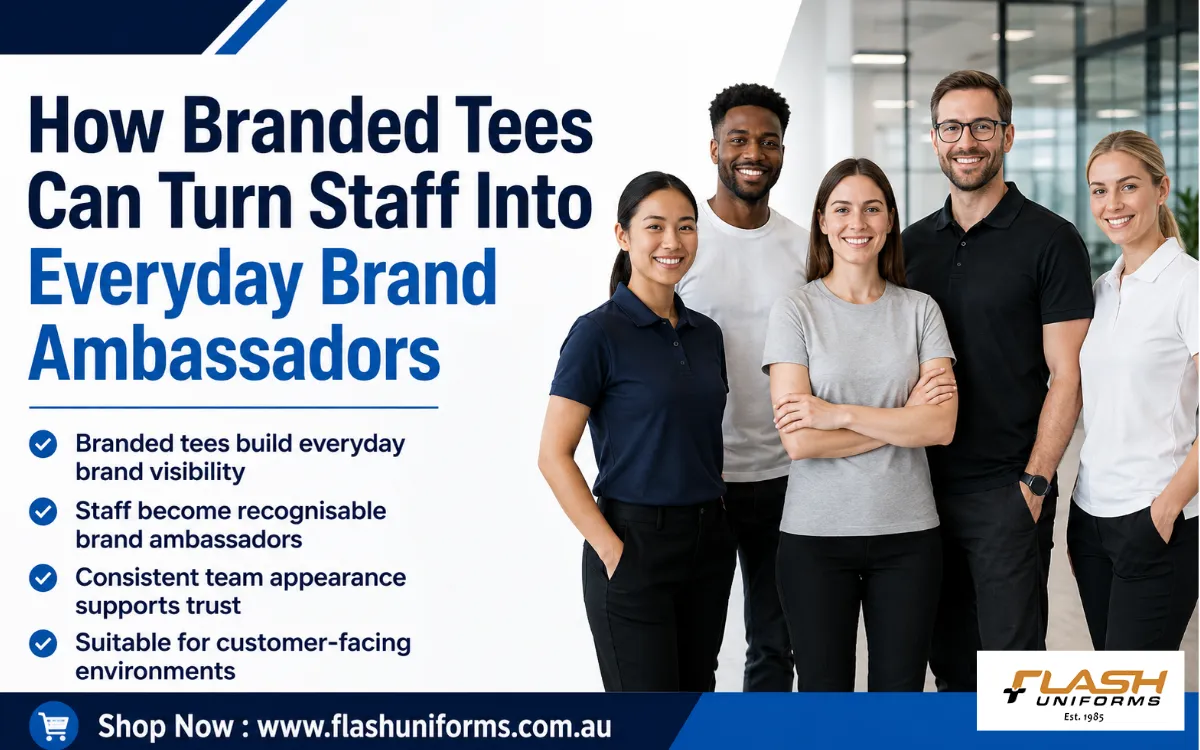
Businesses invest heavily in websites, signage, vehicles and advertising, but staff clothing is another highly visible part of the brand. Well-designed custom t-shirts can give employees a coordinated appearance while displaying a company identity wherever the team works, travels or interacts with customers.
The goal should not be to turn employees into walking billboards. Effective staff tees combine comfort, simplicity and thoughtful branding so the clothing feels natural to wear while still making the business recognisable.
Why T-Shirts Work for Modern Teams
T-shirts are versatile.
They can suit:
-
Retail teams
-
Café workers
-
Warehouse crews
-
Events
-
Fitness businesses
-
Promotional teams
-
Creative workplaces
-
Delivery teams
-
Community activities
Their relatively simple construction also creates a large surface area for branding.
A subtle logo can produce a clean staff look, while a larger graphic may be appropriate for events or promotional campaigns.
Begin With the Purpose
Before choosing a design, identify why the shirts are being created.
Are they intended as:
-
Everyday staff clothing?
-
Event apparel?
-
Promotional merchandise?
-
Temporary campaign clothing?
-
On-site crew identification?
-
Customer giveaways?
Each purpose may require a different approach.
An everyday employee tee should prioritise long-term comfort and subtle branding. A promotional event shirt may support a bolder visual design.
Choose the Garment Before Finalising the Artwork
Logo design and garment selection should work together.
A design created without considering the shirt may be too large, poorly positioned or unsuitable for the material.
Consider:
-
Shirt colour
-
Fabric
-
Fit
-
Print area
-
Logo colours
-
Intended decoration method
A simple mock-up can help teams visualise the finished result.
Keep Everyday Designs Wearable
Employees are more likely to feel comfortable in branded clothing that looks like a good-quality garment first and promotional merchandise second.
For regular staff use, avoid unnecessary clutter.
A common approach includes:
Front
Small company logo.
Back
Optional larger business name, service or graphic.
Sleeve
Optional secondary branding.
The final arrangement should suit how customers interact with employees.
Choose Suitable Tees for the Role
Businesses comparing everyday options can browse Work T-shirts to evaluate garments suitable for different team environments.
Selection should consider far more than colour.
Look at:
-
Weight
-
Fabric feel
-
Fit
-
Size range
-
Neck construction
-
Care requirements
-
Branding suitability
Colour Should Support Recognition
Shirt colour plays a major role in the overall appearance.
Using a company colour can strengthen brand recognition, but it is not always necessary.
Neutral shirts often provide an excellent background for colourful logos.
Consider how the shirt looks alongside:
-
Company signage
-
Vehicles
-
Aprons
-
Jackets
-
Trousers
-
Store interiors
The overall visual identity matters more than perfectly matching one colour.
Comfort Encourages Consistent Wear
Employees will spend many hours wearing staff tees.
Choose garments that feel comfortable across a full shift.
For active environments, breathability and freedom of movement may be particularly important.
Sizing should also be inclusive.
Where possible, offer fit options while keeping branding and colour consistent.
Printing Quality Matters
Decoration becomes part of the garment.
A print that feels uncomfortable, cracks prematurely or looks poorly positioned can undermine the entire result.
The ideal method depends on:
-
Artwork
-
Number of colours
-
Fabric
-
Quantity
-
Required finish
-
Design size
Businesses should discuss these factors before committing to a production method.
Use Shirts Across Multiple Customer Touchpoints
Branded tees can appear in more places than the workplace.
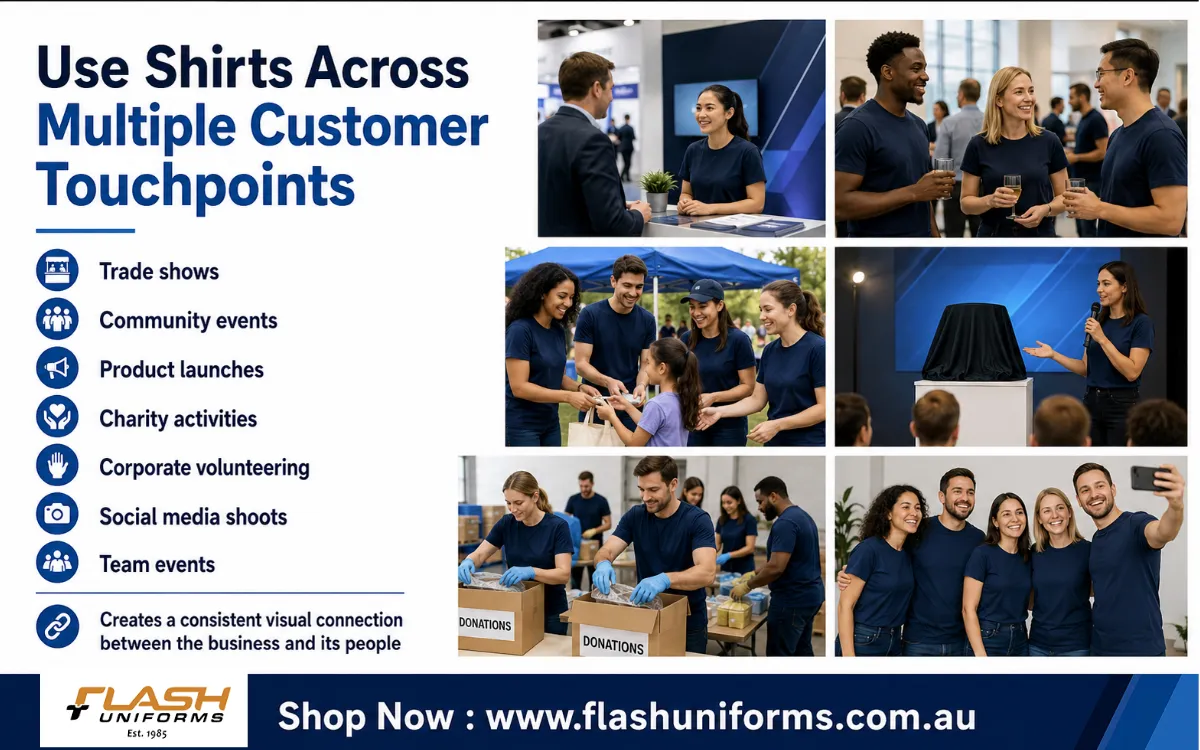
Employees may wear them during:
-
Trade shows
-
Community events
-
Product launches
-
Charity activities
-
Corporate volunteering
-
Social media shoots
-
Team events
This creates a consistent visual connection between the business and its people.
Combine Tees With Other Branded Clothing
A tee-only uniform may work during warmer weather but disappear underneath personal jackets when conditions cool.
Consider creating complementary outerwear.
This might include:
-
Hoodies
-
Jackets
-
Vests
-
Sweatshirts
Keeping branding consistent across layers allows staff to remain recognisable year-round.
Give Employees More Than One Shirt
If tees are expected to be worn regularly, employees need enough items to rotate.
The appropriate allocation depends on the number of weekly shifts and washing frequency.
Providing only one garment can result in excessive wear or employees substituting personal clothing.
Keep Artwork Records
Once the team has an approved design, store the relevant files and specifications.
Record:
-
Logo version
-
Print dimensions
-
Placement
-
Garment colour
-
Product style
-
Decoration method
These records simplify future orders and help maintain consistency.
Refresh Without Constantly Redesigning
Brand consistency is valuable.
There is usually no need to redesign employee clothing every season.
Instead, use a strong core design and make occasional updates where necessary.
Temporary event shirts can be more experimental, while regular employee clothing should remain recognisable over time.
Why Choose Flash Uniforms?
Flash Uniforms helps Australian businesses source team apparel and apply custom branding across a variety of garment types. Organisations can build staff wardrobes using tees, polos, workwear and outer layers while coordinating decoration across the range. This can make it easier for growing businesses to maintain a consistent visual identity as teams and clothing requirements expand.
Final Thoughts
Branded tees can be an effective extension of a company’s identity when they are comfortable, well designed and suited to the employee’s role.
Start with the purpose, choose a quality garment and design the branding around how the shirt will actually be worn.
Avoid overloading the garment with promotional information.
A simple, confident design can often create a stronger impression.
When custom t-shirts look and feel like clothing employees genuinely want to wear, staff can represent the organisation naturally during everyday interactions, events and customer-facing work.