

In Diablo 4 Season 14, Amulets are among the most crucial pieces of equipment in many endgame builds. Regardless of playstyle or build, a good Amulet directly impacts a character’s final strength.
However, for many players, the most difficult part of crafting Amulets isn’t material gathering, but rather figuring out the correct order for the process. By utilizing Horadric Cube, The Occultist, and the enhancement system, players can streamline the crafting process.
For players aiming for endgame gear, D4Gold.com suggests not viewing Amulet crafting as a gamble, but as a phased gear upgrade plan.
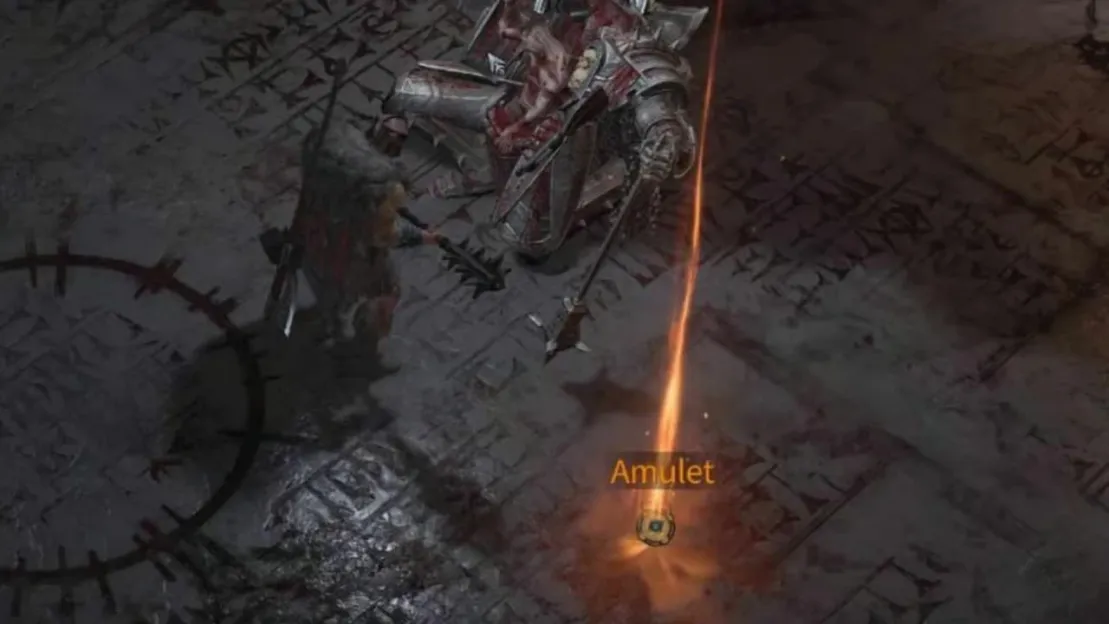
Choosing the Right Amulet Base Item
The first step in crafting a Season 14 endgame Amulet is choosing the right base item.
Currently, a 900-power white Amulet is recommended as a starting point. Compared to Legendary gear that already has random affixes, the biggest advantage of a white base item is its greater flexibility in customization, allowing you to plan subsequent attributes entirely according to your build needs.
High power not only affects the range of base attributes but also the likelihood of high-level affixes appearing during later enhancement stages. For players aiming for endgame quality, the quality of the base item determines the future potential of this gear.
Of course, if you already have a decent Legendary Amulet, you can use it as transitional gear. Players are advised to determine their final build direction before officially starting the craft.
If you want to save time preparing crafting materials for their Season 14 gear projects, you can buy Diablo 4 items from D4Gold.com and focus more on optimizing their final Amulet instead of spending hours farming.

Using Prisms to Determine Direction
After selecting the base item, the next step is to place the white Amulet into Horadric Cube and use the corresponding Prism.
The purpose of Prism isn’t to directly generate a perfect piece of equipment, but to provide Amulet with basic attribute directions, including skill category-related bonuses and overall skill enhancements.
This stage doesn’t require excessive focus on specific numerical values; the key is to ensure you obtain attribute categories that meet your build’s needs. However, if Diablo 4 players don’t have a clear goal from the start and simply choose whatever affix looks good, it can easily lead to conflicts later in the crafting process.
D4Gold.com believes it’s more important to view Prism stage as determining direction rather than pursuing the final result. The actual optimization process needs to be completed in the following stages.
Horadric Cube Targeted Transfiguration
One of the biggest changes to Amulet crafting in Diablo 4 Season 14 is that Horadric Cube provides a more explicit way to adjust affixes.
Through the targeted transfiguration function, players can use the corresponding Prism to transfigur a random affix from one category to another random affix within the same category.
It’s important to note that this is not a traditional affix assignment system. Players can no longer directly select desired attributes; instead, they narrow down the random pool within a limited category.
This means that randomness still exists in the crafting process, but compared to the past when players relied entirely on The Occultist for repeated rerolls, players now have more control.
The Occultist Protects Desirable Affixes
The Occultist plays a crucial role in Amulet crafting. Many Diablo 4 players mistakenly believe that The Occultist only handles simple rerolls, but in Season of Death Awakening, its greatest value lies in helping players protect already acquired desirable affixes.
When an Amulet yields a very satisfactory attribute, players can go to The Occultist to replace the affix. If the new result is inferior to the original attribute, players can choose No Change, retaining the current affix.
Protected affixes will no longer be affected by Horadric Cube directional transfiguration, meaning the crafting process is no longer about randomizing all attributes at once, but gradually locking in advantages and optimizing the remaining space.
Optimize Remaining Affixes
Once your Amulet has one or two key affixes, you can continue adjusting the remaining attributes. This stage requires assessing your investment based on your build needs in Season of Death Awakening in Diablo 4.
Note that core skill level is also an attack-related attribute; therefore, encountering core skill level during targeted transfiguration does not necessarily indicate failure.
Many players immediately give up when they see an affix that isn’t their target, but some seemingly different combinations may actually yield higher practical benefits.
If your three main affixes have reached their target, you can try to pursue a fourth attribute. However, a fourth affix usually requires a significant investment of materials, and the improvement may not be substantial.
If your first three affixes are already excellent, retaining the gear and investing in improving other slots is often more worthwhile than continuing to pursue theoretical perfection.
Final Amulet Upgrade Order
In Diablo 4 Season of Death Awakening, it’s recommended to process them in SMART order:
-
Socket
-
Masterwork
-
Aspect
-
Reroll
-
Temper
Adding a Second Aspect
In Season 14, Amulets have a special mechanism: a second aspect can be added using Horadric Cube.
This mechanism only applies to Amulets, but the second aspect is limited to Utility Aspects. Diablo 4 players can check the available Utility Aspects at The Occultist beforehand, prepare the corresponding Prism, and complete Transfiguration in Horadric Cube.
Since the target aspect still has randomness, multiple attempts may be needed to achieve a satisfactory result.
D4Gold.com recommends that players prepare sufficient resources before performing the second aspect transfiguration to avoid failing to complete the equipment because of insufficient materials in the last step.
The crafting of Amulets in Season 14 is not essentially about infinitely farming randomness, but about using game mechanics to continuously reduce the range of randomness. For players aiming to build a top-tier build, a good Amulet isn’t a lucky drop, but a core piece of equipment acquired through the correct process.